
If you are running a WordPress site in February 2026, the cybersecurity landscape has just drastically shifted. A critical vulnerability was recently disclosed that puts nearly a million websites at risk of total takeover, proving once again that the “set it and forget it” era of website management is officially dead.
As business owners, you cannot afford to ignore the infrastructure that powers your brand. The latest developments this month highlight exactly why upgrading your server environment is no longer just about speed—it is about survival.
Managed WordPress Hosting: The Ultimate Defense in 2026
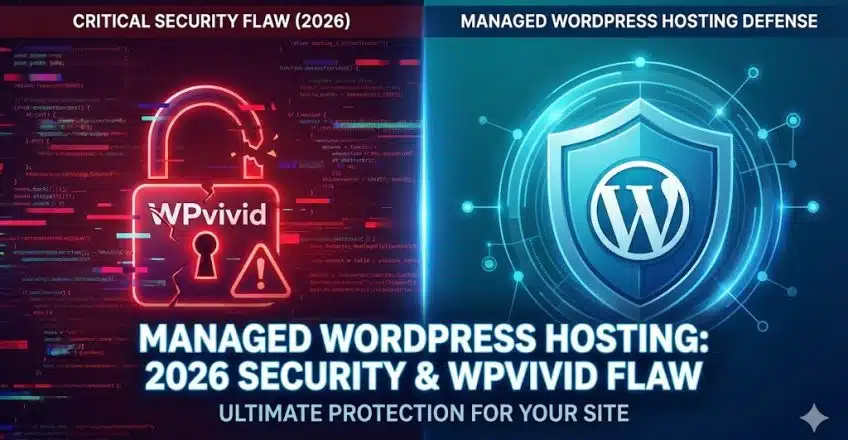
Just a few days ago, on February 12, 2026, security researchers uncovered a massive flaw in the popular WPvivid Backup & Migration plugin. Tracked as CVE-2026-1357, this Remote Code Execution (RCE) vulnerability affects over 900,000 installations. It allows unauthenticated attackers to upload malicious files and seize complete control of the server if certain backup features are enabled.
When a crisis like this hits, the difference between a compromised site and a secure one comes down to your hosting environment.
Why Traditional Servers Fail During Zero-Day Attacks
On cheap, shared servers, you are entirely responsible for patching your own plugins. If you miss an update window, your site is an open door for automated botnets.
With Managed WordPress Hosting, security is proactive rather than reactive.
-
Automatic Vulnerability Patching: When severe flaws like the WPvivid CVE drop, managed platforms deploy network-wide firewall rules and force-update vulnerable plugins before hackers can exploit them.
-
Isolated Environments: Unlike traditional shared hosting, a managed infrastructure ensures that if another site on the network is compromised, the infection cannot traverse directories to reach your files.
Beyond Security: The Future of Managed WordPress Hosting
While surviving cyberattacks is critical, the hosting industry is also preparing for major shifts in web architecture this year.
As we discussed in our recent guide on the [Internal Link: WordPress Interactivity API 2026], modern websites are demanding more dynamic, instant interactions without full page reloads.
AI Integration and Managed WordPress Hosting
Looking ahead toward the release of WordPress 7.0 later this year, Artificial Intelligence is becoming deeply embedded into the core experience. From AI-assisted content generation to automated SEO checks, these heavy computational tasks require robust server resources. A standard server will choke under the weight of these new tools, making a managed, highly optimized environment the only logical choice for forward-thinking brands.
Additionally, with ICANN opening a new round of generic Top-Level Domain (gTLD) applications in April 2026, the digital real estate market is expanding. As brands secure these new, highly specific domain extensions, they need equally modern hosting solutions to power them.
The internet is moving faster than ever, and the threats are evolving just as quickly. You should be focusing on growing your business, not monitoring security logs or manually updating plugins out of fear.