
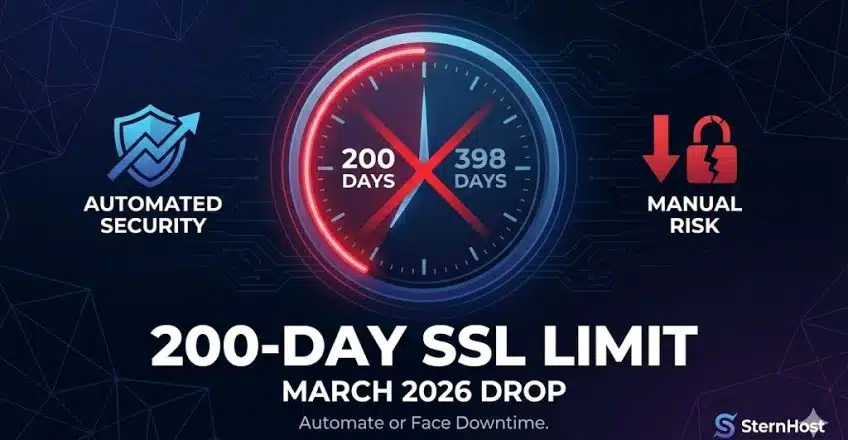

The 200-Day SSL Limit and the Push for Quantum Security
Why is the industry suddenly cutting certificate lifespans in half? It is not just to make life harder for server administrators. The 200-Day SSL Limit is the first aggressive step in a phased roadmap designed to prepare the internet for the era of Post-Quantum Cryptography (PQC).
As quantum computing advances rapidly, the security algorithms that have protected the web for decades (like RSA 2048) are increasingly at risk. The global strategy to defend against future quantum attacks relies on “crypto-agility”—the ability to swap out encryption keys rapidly across the entire internet.
-
The March 2026 Drop: Maximum validity is now strictly 200 days.
-
The 2027 Milestone: Lifespans will be slashed again to just 100 days.
-
The Final 2029 Goal: All public certificates will expire after a mere 47 days.
By enforcing the 200-Day SSL Limit now, browsers are forcing organizations to abandon manual installations and adopt fully automated Certificate Lifecycle Management (CLM).
Why Manual Renewals Will Fail Under the 200-Day SSL Limit
In the past, missing an SSL renewal meant a frantic morning of downloading a ZIP file, copying a CSR key, and restarting your Apache or Nginx server. It happened once a year, and it was a forgivable mistake.
Under the new 200-day framework, the margin for error vanishes. Domain validation reuse periods are also shrinking, meaning Certificate Authorities (CAs) will require you to prove you own your domain much more frequently before issuing a renewal. If a certificate expires, Chrome and Safari will instantly block users from accessing your site with a massive, red “Your Connection is Not Private” warning. This destroys consumer trust and plummets your SEO rankings immediately.
Automating Your Defense Against the 200-Day SSL Limit
The only viable solution to this shrinking validity window is removing human intervention entirely. Your hosting environment must handle the generation, validation, and deployment of encryption keys natively.
Modern platforms are already integrating ACME protocols (Automated Certificate Management Environment) directly into the server architecture. This allows your server to constantly monitor the expiration dates and silently rotate the cryptographic keys weeks before they expire, ensuring zero downtime.
As we noted in our recent breakdown of the [Internal Link: Managed WordPress Hosting] security flaws, proactive, automated infrastructure is the only way to survive the 2026 web landscape. You should not be spending your time tracking calendar alerts just to keep your checkout page secure.