
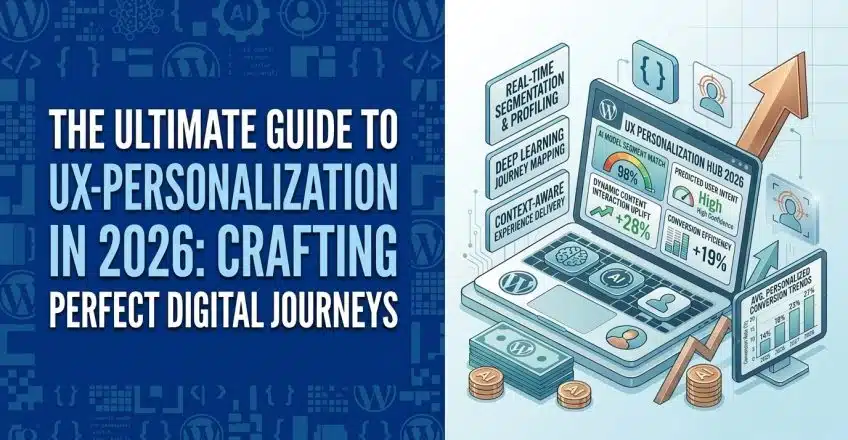

The transition from static, rule-based web design to dynamic, context-aware interfaces represents a critical evolution for digital agencies managing high-volume enterprise traffic. Historically, creating tailored user journeys required marketing teams to manually configure rigid segmentation rules that struggled to scale across diverse global audiences. Today, embedding machine learning models directly into the presentation layer allows the interface to adapt to user behavior, intent, and geographic data in real time, delivering hyper-relevant content seamlessly.
Scaling Enterprise Conversions with AI driven UX personalization
For digital agencies, the primary challenge of building highly customized web experiences is balancing interface adaptability with strict performance budgets. Traditional personalization engines often introduce severe latency and layout shifts because the origin server must process complex conditional logic before rendering the Document Object Model (DOM). By adopting a modern architectural approach, agencies shift this computational burden from manual A/B testing software to predictive, algorithmic rendering engines that anticipate user needs instantly.
Core Mechanisms of AI driven UX personalization
Operating a dynamic presentation layer requires an infrastructure capable of processing continuous streams of telemetry data. Machine learning algorithms analyze behavioral signals—such as scroll velocity, click patterns, and historical navigation paths—to synthesize a unique interface configuration for every individual visitor. This eliminates the friction of generalized navigation and directly addresses the specific intent of the user.
-
Dynamic content optimization automatically swaps hero images, headlines, and call-to-action placements based on predictive conversion patterns.
-
Automated real-time testing evaluates thousands of UI component variations simultaneously, discarding underperforming layouts without human intervention.
-
Predictive churn prevention identifies at-risk visitors by analyzing session friction, instantly adapting the interface to offer logical next steps or tailored incentives.
Implementing AI driven UX personalization at the Edge
To execute these algorithmic interface changes without degrading core web vitals, engineering teams must deploy personalization logic at the network edge. Instead of routing personalization requests back to a centralized database, edge compute nodes evaluate the machine learning models locally. This ensures that the tailored DOM elements are delivered to the user with sub-millisecond latency, preventing the visual flickering commonly associated with client-side script execution.