
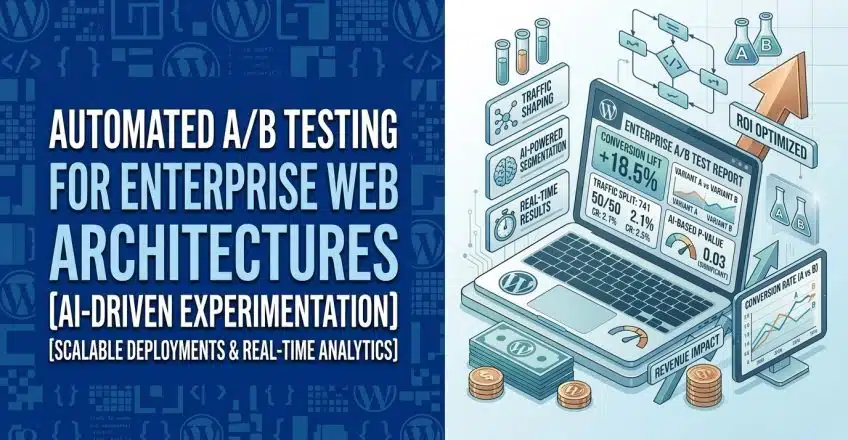

Relying on manual experimentation platforms to determine the optimal configuration of digital interfaces restricts enterprise conversion velocity. When marketing teams manually split traffic between two static hero sections or call-to-action (CTA) buttons, they suffer from prolonged data collection periods and client-side rendering latency. Transitioning to algorithmic optimization allows machine learning models to dynamically evaluate thousands of multivariate combinations in real time. This continuous optimization cycle ensures that every unique visitor receives the highest-converting layout without the performance penalties associated with traditional client-side JavaScript injection.
Scaling Enterprise Conversions via Automated AB Testing
Modern digital architectures demand a shift away from rigid, hypothesis-driven split testing toward continuous, multi-armed bandit algorithms. Instead of waiting weeks for statistical significance, intelligent models dynamically allocate traffic to winning interface variants in real time. When an autonomous engine detects that a specific hero image paired with a localized CTA generates a higher engagement rate for users in a particular geographic region, it instantly routes similar traffic to that exact configuration.
Architectural Foundations of Automated AB Testing
Implementing algorithmic interface adjustments requires an infrastructure capable of evaluating predictive models at the network edge. If the origin server must process every layout variation, the resulting Time to First Byte (TTFB) degradation will negate any conversion benefits gained from the optimized interface.
-
Edge-side rendering evaluates machine learning models locally to deliver dynamic hero components with sub-millisecond latency.
-
Multi-armed bandit algorithms continuously shift traffic routing toward winning user interface variants to prevent lost revenue during the exploration phase.
-
Headless content integration allows the optimization engine to swap typography, imagery, and layout structures natively within the Document Object Model.
Executing Automated AB Testing at the Edge
By moving the computational logic directly to edge compute nodes, systems engineers eliminate the visual flickering commonly caused by traditional experimentation tools. The autonomous system intercepts the incoming HTTP request, evaluates the user’s behavioral telemetry, and rewrites the HTML response payload before it reaches the browser. This ensures that the dynamically optimized hero section and CTA render instantly, maintaining strict adherence to Core Web Vitals while maximizing user engagement.