
The architecture of modern digital experiences demands an immediate transition from static content delivery to highly dynamic, context-aware user interfaces. Historically, marketing and engineering teams attempted to tailor web environments by injecting bloated client-side JavaScript, which severely degraded core web vitals and caused unacceptable layout shifts. By shifting the computational logic directly to the network edge, enterprise architectures can now evaluate complex machine learning algorithms against live behavioral telemetry. This paradigm allows platforms to adapt layouts, modify calls to action, and structure navigation trees instantaneously based on live visitor intent without sacrificing raw page load speed.
Architecting Real Time UX Personalization for Global Audiences
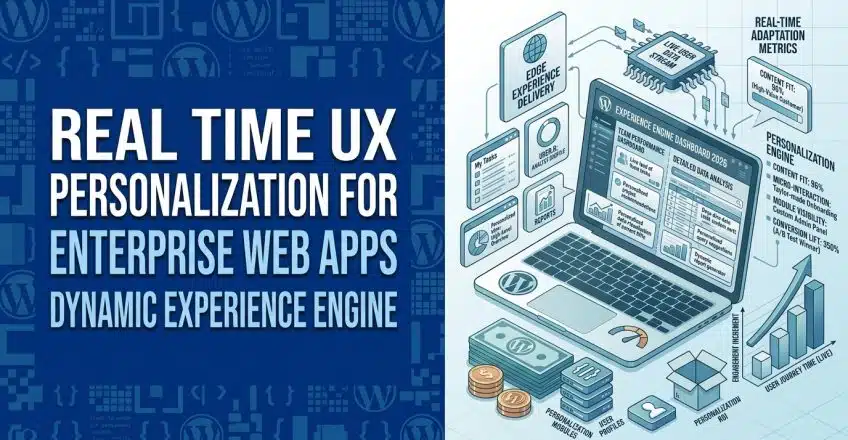
Delivering tailored content at scale requires severing the dependency on origin server rendering. When a user interacts with a globally distributed application, waiting for a centralized database to query their historical click path and return a personalized HTML payload introduces massive latency. To eliminate this bottleneck, modern systems push the evaluation logic to edge compute nodes. These nodes intercept incoming HTTP requests, assess the user’s geographic location, active session velocity, and referral source, and dynamically restructure the Document Object Model (DOM) before the response ever reaches the browser.
Core Mechanisms of Real Time UX Personalization
Operating a responsive personalization engine requires deep integration between headless content management systems and autonomous behavioral analysis agents. Instead of relying on rigid, human-configured segmentation rules, intelligent models continuously ingest data streams to predict the highest-converting interface layout for each unique session.
-
Edge-side DOM rewriting manipulates content payloads locally, ensuring that customized interfaces render instantly without visual flickering.
-
Algorithmic intent prediction analyzes granular interaction metrics like cursor velocity and dwell time to anticipate user needs proactively.
-
Headless API integrations allow the autonomous personalization engine to pull localized typography, graphics, and pricing structures directly into the pre-compiled template natively.
Scaling Enterprise Conversions via Real Time UX Personalization
For high-throughput digital agencies and international software vendors, deploying these autonomous systems drastically reduces the friction of the buyer journey. If an anonymous user repeatedly visits technical documentation related to API rate limits, the system does not wait for an explicit login to act. The edge node instantly reconfigures the next page load, elevating enterprise upgrade paths and surfacing relevant architectural case studies directly within the hero section. This seamless adaptation maximizes engagement metrics while maintaining strict adherence to strict performance budgets.