
The complexity of modern web applications makes manual quality assurance an unsustainable bottleneck for high-velocity engineering teams. As digital agencies and enterprise teams push multiple deployments per day, ensuring that a styling update in one micro-frontend does not break the layout of another requires extensive visual verification. Traditional automated testing scripts rely on rigid Document Object Model (DOM) locators and pixel-perfect image comparisons, which frequently trigger false positives when dynamic content renders differently across environments or screen sizes.
To resolve this fragility, organizations are adopting intelligent testing frameworks powered by machine learning. These systems navigate web interfaces like human users, understanding context, layout hierarchy, and visual intent, rather than blindly comparing pixels. This architectural shift dramatically reduces test maintenance overhead and accelerates the deployment lifecycle for globally distributed digital products.
Scaling Enterprise Testing with Autonomous QA agents
Integrating machine learning models into the continuous integration pipeline fundamentally changes how visual regression and cross-browser compatibility are evaluated. Instead of engineers writing hundreds of lines of Cypress or Playwright code just to click a button and verify a rendering state, the system ingests natural language test cases. The agent then spins up headless browser instances, executes the required user journeys, and evaluates the visual output across varying viewports and rendering engines concurrently.
Because these agents evaluate the user interface holistically, they drastically reduce the time spent chasing broken tests. Engineering teams can confidently merge code knowing that visual discrepancies, overlapping elements, or responsive design failures will be caught long before they reach the production environment.
The Architecture Behind Autonomous QA agents
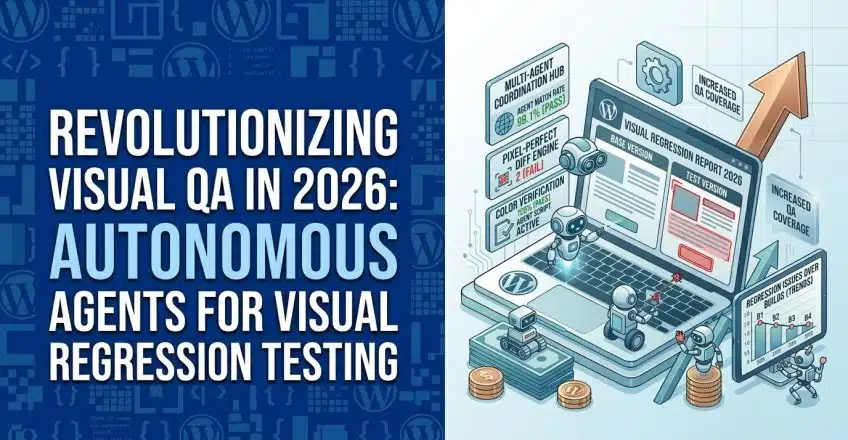
Modern visual testing architectures bypass the limitations of strict DOM-based assertions by leveraging computer vision algorithms. When a new pull request is opened, these systems compare the staging environment against the production baseline by analyzing the semantic structure of the page. If a marketing banner shifts by two pixels due to a font rendering difference, the agent correctly identifies it as a benign change. However, if a checkout button is obscured by a layout error on a mobile viewport, the system immediately flags the critical layout shift.
-
Computer vision algorithms analyze the structural relationships between elements to ignore dynamic content shifts and prevent false positive alerts.
-
Natural language processing allows quality assurance engineers to define test scenarios in plain English, drastically reducing the time spent maintaining automated scripts.
-
Self-healing locators automatically adapt to underlying code changes, ensuring tests continue to run successfully even when developers alter structural attributes or class names.
Implementing Autonomous QA agents in CI/CD Pipelines
Deploying these intelligent testers within a continuous integration workflow provides immediate, actionable feedback directly inside the version control system. Platforms utilizing these autonomous workflows integrate directly into GitHub Actions or GitLab CI. When an agent detects a genuine visual regression, it generates a comprehensive visual report highlighting the exact component failure across Chrome, Firefox, and WebKit, allowing front-end engineers to resolve the user interface bug before the code merges into the main branch.